Barbara Kruger
b. 1945, Newark, New Jersey · Lives and works in New York and Los Angeles · 2 works available
The editions
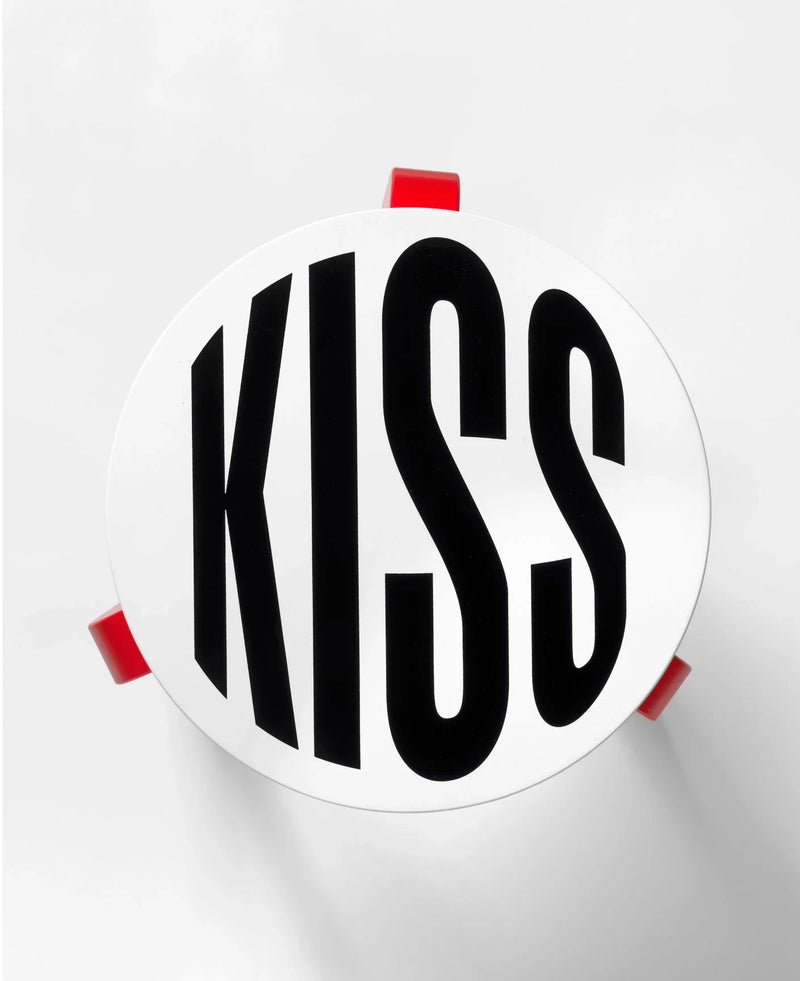
Barbara Kruger's studio practice represents a distinctive synthesis of conceptual art strategies and commercial design methodologies, reflecting her background in graphic design and her critical engagement with media culture. Working between studios in Los Angeles and New York, Kruger has developed a production approach characterized by appropriation, digital manipulation, and strategic deployment across various contexts and scales.
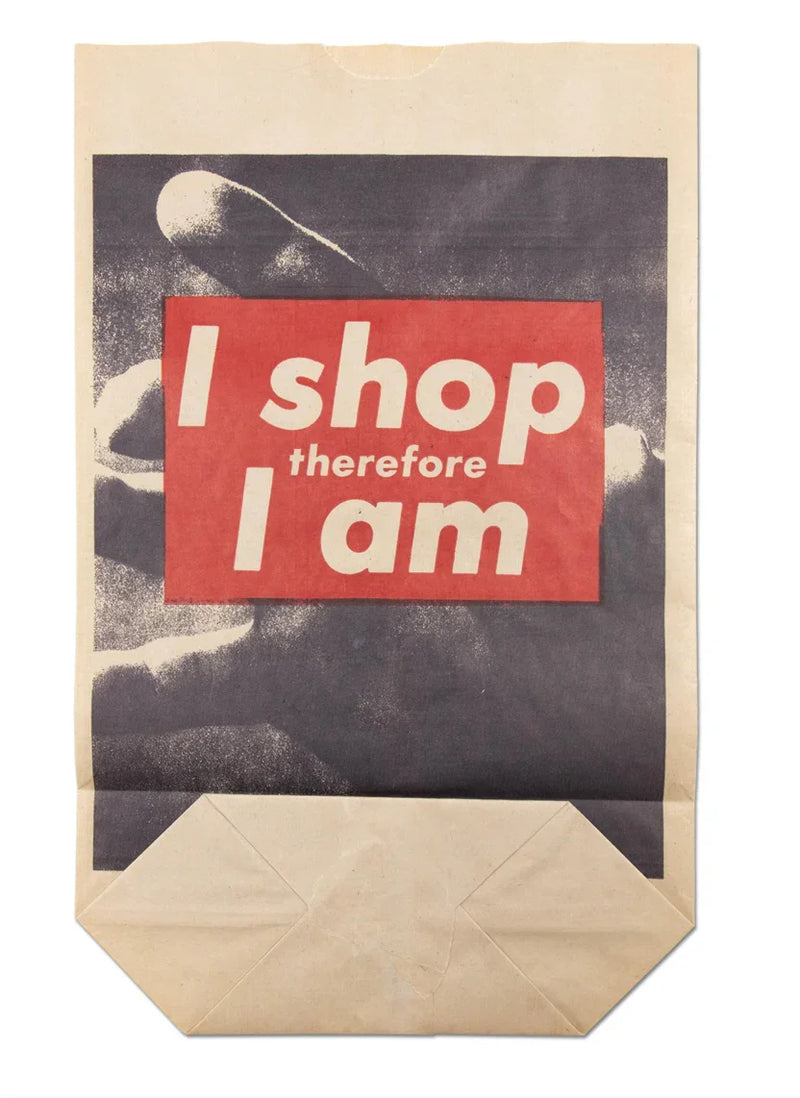
Central to Kruger's technical process is her methodical selection and transformation of found imagery. For her signature photo-text works, Kruger typically begins by sourcing black-and-white photographs from vintage magazines, instructional manuals, and advertising from the 1940s-1960s. These found images are then cropped, enlarged, and sometimes reversed to create more powerful compositional arrangements. The text elements, initially handset in paste-up boards in her early career and later composed digitally, are meticulously arranged in her characteristic fonts—primarily Futura Bold Oblique or Helvetica Ultra Condensed—to create specific relationships with the photographic elements. This careful construction of the text-image relationship creates works that function simultaneously as visual statements and conceptual propositions.
For her large-scale installations, Kruger employs digital tools to adapt her designs to specific architectural contexts, often working with printers and installation specialists who can realize her precisely calculated environmental transformations. These room-wrapping installations require extensive pre-planning and site analysis to determine how viewers will physically experience the work as they move through the space. For these projects, Kruger functions more as a director or producer, overseeing teams of fabricators, printers, and installers who execute her designs according to detailed specifications.
What distinguishes Kruger's production method is her strategic adaptation of commercial design techniques to fine art contexts. Rather than concealing her commercial background, Kruger deliberately employs the visual effectiveness of advertising to deliver her conceptual content, creating a productive tension between medium and message. Her work acknowledges how commercial design shapes our visual environment while repurposing its strategies toward critical ends. This approach extends to her embrace of mechanical reproduction and, later, digital tools—media often viewed with suspicion in fine art contexts but central to Kruger's democratic conception of how art circulates and functions.
In recent decades, Kruger has expanded her practice to incorporate video, audio installations, and digital projections, adapting her distinctive approach to new technological contexts while maintaining consistent conceptual concerns. Throughout these evolutions in media and scale, Kruger has maintained remarkable consistency in her visual language while continuously finding new applications for her critical examination of power, identity, and representation through text and image.
Biography
Barbara Kruger's artistic legacy centers on her transformative impact on how text and image function together in contemporary visual culture and her incisive critique of power, gender, and consumer society. As one of the most influential conceptual artists to emerge in the late 20th century, Kruger has fundamentally altered how we understand the relationship between visual communication and ideological systems, creating a body of work whose significance extends far beyond the art world into broader cultural discourse.
Kruger's most immediately recognizable contribution has been her distinctive visual language combining appropriated photographs with declarative text in red, white, and black. This aesthetic strategy, drawing on her background in graphic design, has become so influential that it constitutes a visual shorthand for conceptual critique, appropriated and referenced across fine art, graphic design, advertising, and fashion. Her direct address to viewers through pronouns like "you," "your," "we," and "I" transformed passive art consumption into active confrontation, creating a new model for how conceptual art could engage directly with its audience.
Beyond formal innovation, Kruger's consistent engagement with feminist critique and analysis of power relationships has profoundly influenced subsequent generations of artists. Her examination of how gender is constructed through visual culture and language provided essential tools for feminist art practice, while her analysis of consumerism and desire anticipated central concerns of contemporary cultural criticism. Works like "Untitled (Your body is a battleground)" (1989) have become iconic representations of reproductive rights struggles that continue to resonate with painful relevance decades after their creation.
Kruger's influence extends well beyond fine art into areas including graphic design, fashion, advertising, and digital media. The "Kruger aesthetic" has been appropriated by commercial entities from Supreme (which prompted her satirical response) to numerous advertising campaigns, demonstrating the visual effectiveness of her strategies even when divorced from their critical content. This widespread adoption—both authorized and unauthorized—has created a complex legacy where her distinctive visual approach has become part of the commercial visual landscape she set out to critique.
Available works
Looking for other works by Barbara Kruger?
Tell us what you're seeking and we'll source it privately — documented before it reaches you. Selling one? We hold collector interest across the editions.